본문
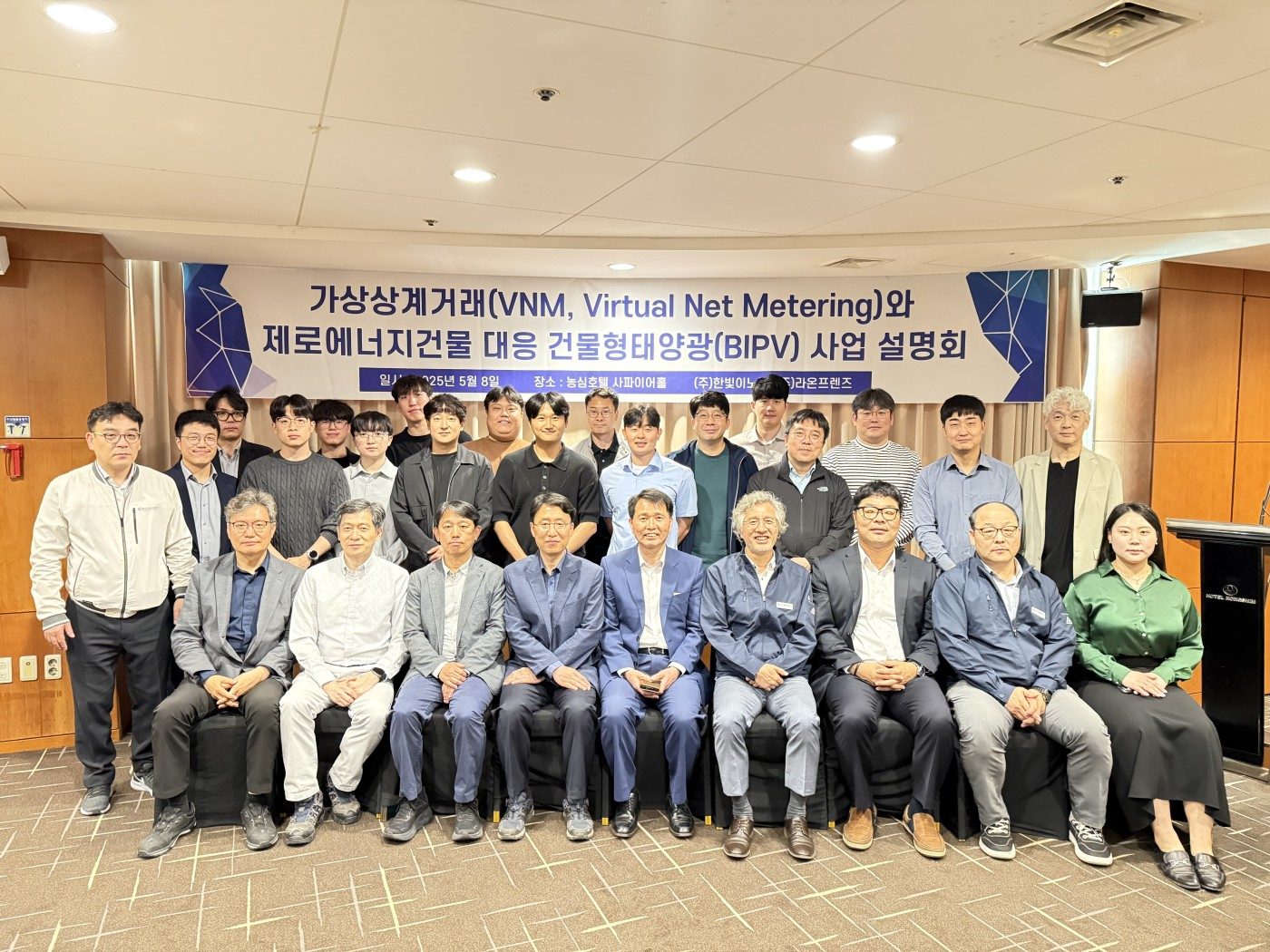
As climate change emerges as a global challenge, various technologies for sustainable energy transition and carbon neutrality are gaining increasing attention.
In line with this trend, Hanbit Innotech Co., Ltd. recently held a seminar on Virtual Net Metering (VNM) and Building-Integrated Photovoltaics (BIPV) for zero-energy buildings, providing a platform to introduce innovative technologies and exchange insights.
Session 1: BIPV Technology for Zero-Energy Buildings
The seminar began with an introduction to BIPV (Building-Integrated Photovoltaics), a solar power system that integrates photovoltaic modules into building exterior materials such as walls, roofs, and windows.
This approach offers both aesthetic and functional advantages while maximizing energy efficiency.
With the growing enforcement of zero-energy building policies, BIPV is rapidly emerging as a key solution for eco-friendly construction. Hanbit Innotech is one of the leading companies providing optimized solutions in this field.
The presentation covered real-world project cases, along with key technical considerations for BIPV during the architectural design phase, including economic feasibility and maintenance aspects. Future scalability and expansion potential were also discussed.
Session 2: Introduction to Virtual Net Metering (VNM)
The seminar also introduced Virtual Net Metering (VNM), a technology that has recently gained significant attention.
VNM is a system that allows electricity generated from a single power facility to be distributed to multiple users who are not physically connected, with electricity charges settled based on individual consumption.
This represents an evolution from the traditional single-user net metering model to a multi-user, shared energy model. It is particularly effective in promoting energy self-sufficiency in urban areas and enabling community-based energy transitions.
Hanbit Innotech is currently developing a VNM system tailored to the domestic market, and is validating its practical applicability through pilot projects and real-world implementations.
During the seminar, detailed explanations were provided on how the system operates, the regulatory framework required for implementation, and real-case demonstrations that highlighted its practicality.
A Meaningful Step Toward Distributed Energy Transition
This seminar went beyond a simple product introduction, serving as an opportunity to revisit the importance of distributed energy as a technological solution to climate change.
In particular, VNM and BIPV are key technologies—each contributing to more flexible energy consumption structures and building-based energy self-sufficiency. Participants were able to directly experience these trends and engage with industry insights.
Following the presentations, a Q&A session and networking opportunities were held, allowing active discussions on potential business collaborations.
Moving forward, Hanbit Innotech aims to continue expanding the adoption of distributed energy technologies through various seminars and demonstration projects, accelerating the realization of energy self-sufficiency and carbon neutrality.